
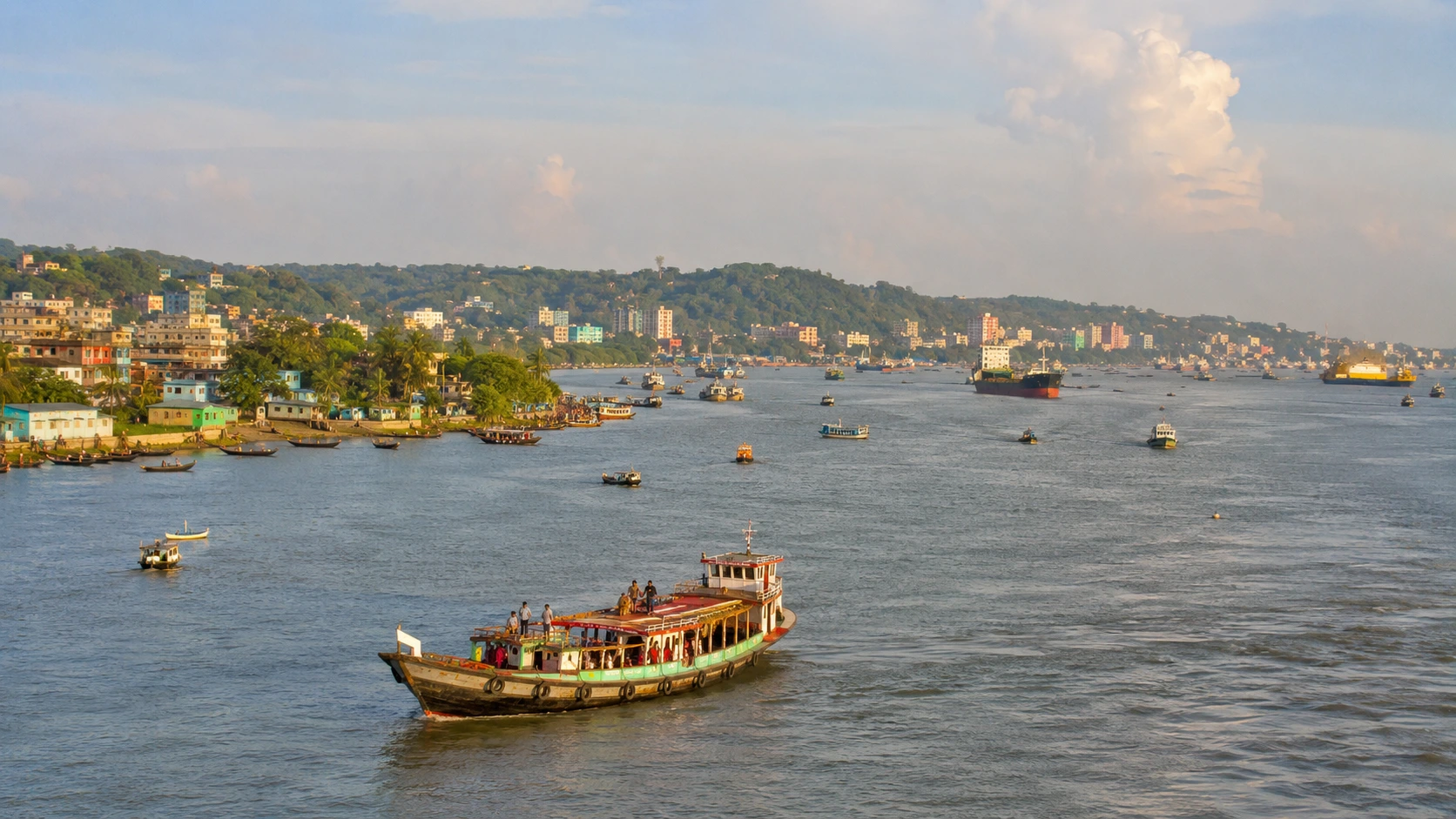
Chittagong town—officially called Chattogram—is not a polished resort city. It is a working port, a railway city, a place of wooded hills, crowded commercial streets, shrines, museums and neighborhoods shaped by the Karnaphuli River and the Bay of Bengal. That contrast is exactly what makes it rewarding for travelers who want to understand Bangladesh beyond its headline attractions.
For most international visitors, two days is enough to experience Chattogram city at a comfortable pace. One day can cover its cultural and historical core; the second can bring together the river, Patenga waterfront and a slower look at local life. Chattogram also works well as a transit stop before Cox’s Bazar. However, the city should not be confused with the Chittagong Hill Tracts, a separate region with different logistics and current security considerations.
This Chittagong travel guide is designed for travelers arriving from the United States and other overseas markets. It explains what is genuinely worth seeing, how to structure your time, where to stay, what transport feels like, what the trip may cost and how to visit respectfully without turning the city into a rushed checklist.
Quick Answer: Is Chittagong Worth Visiting?
Yes—Chittagong is worth visiting if you enjoy port-city atmosphere, cultural museums, World War II history, local food and less-touristed urban experiences. It is especially useful as a one- or two-night stop between Dhaka and Cox’s Bazar. First-time visitors should allow two days, stay in a well-connected neighborhood such as Agrabad or Khulshi, and use a trusted car and driver or local guide to avoid losing time in traffic.
Chattogram is less suitable for travelers expecting a walkable old town, a resort beach or a dense cluster of famous monuments. Its appeal comes from context: the commercial energy of the port, the ethnic diversity represented in its museum, the solemn history of its war cemetery, the hills threaded through the city and the changing light around the Karnaphuli estuary.
Chittagong or Chattogram: Which Name Should Travelers Use?
Chattogram is the official English spelling used by Bangladeshi authorities. Chittagong remains widely used internationally, in older guidebooks, hotel listings, search queries and familiar place names such as Chittagong War Cemetery. Both names refer to the same city.
For practical travel, search both spellings. An airline or government page may say Chattogram, while an international booking platform may still categorize the destination as Chittagong. The airport code is CGP, and the main airport is Shah Amanat International Airport.
This guide uses both forms naturally: “Chattogram” for the current official city name and “Chittagong” where it matches common traveler language.
Where Is Chittagong Town?
Chattogram lies in southeastern Bangladesh beside the Karnaphuli River, close to the Bay of Bengal. It is the country’s principal port city and an important commercial gateway to the southeast. Its geography feels different from flat, river-dominated Dhaka: low hills rise within the urban area, roads curve around higher ground and the port shapes both traffic and daily life.
The city is a logical stop on a longer Bangladesh itinerary. Travelers commonly arrive from Dhaka by air, train or road, stay one or two nights, and then continue toward Cox’s Bazar. Chattogram also serves routes toward Bandarban and Rangamati, but those Hill Tracts destinations are not extensions of an ordinary city tour and require separate safety, permit and logistics checks.
Best Things to Do in Chittagong Town
The best Chittagong tourist attractions are spread across the city rather than concentrated in one heritage district. Traffic can be unpredictable, so group nearby places together and avoid planning too many fixed-time admissions on the same day.
Understand Bangladesh’s Diversity at the Ethnological Museum
The Ethnological Museum in Agrabad is one of the city’s most valuable stops for a foreign visitor. Its collections introduce the material culture, clothing, tools, domestic life and traditions of different communities in Bangladesh, with additional comparative displays from other parts of the world.
The museum matters because many short Bangladesh itineraries reduce the country to Dhaka, tea gardens and the Sundarbans. Chattogram’s museum adds a wider human story. It also gives visitors better context before any responsibly planned journey involving indigenous communities elsewhere in the country.
Allow about 60 to 90 minutes. Displays and labels may vary in depth, so a knowledgeable guide can make the visit more meaningful. Opening hours and weekly closures can change around government holidays; verify them locally before setting out rather than relying on an old directory listing.
Visit Chittagong War Cemetery Quietly
The Commonwealth War Cemetery is a landscaped memorial and burial ground connected with the Second World War and the Burma campaign. It is not a conventional tourist attraction. The appropriate experience is slow, quiet and reflective.
The Commonwealth War Graves Commission currently lists split daily visiting hours, with a midday closure. Because operating details can change, check the official cemetery page shortly before the visit. Dress respectfully, keep voices low and avoid using graves as casual photo props.
For history-minded visitors from the United States, Britain, Canada, Australia and other Allied nations, the cemetery offers a tangible connection to a regional theater of war that receives limited attention in many mainstream itineraries.
See the Former Circuit House and Museum Context
The historic Circuit House is associated with a pivotal episode in Bangladesh’s modern political history and has operated as the Zia Memorial Museum. Its colonial-era architecture and later national significance make the site relevant even to travelers who are unfamiliar with Bangladesh’s political timeline.
Access conditions, displays and operating status should be checked before arrival. Treat the stop as part of a broader modern-history route rather than building the entire day around it. A guide who can explain the transition from the colonial period through the Liberation War and later politics will provide more value than a quick exterior photograph.
Experience the Karnaphuli River and Port-City Landscape
The Karnaphuli is central to Chattogram’s identity. Even when port installations are not accessible, the movement of vessels, bridges, river traffic and industrial infrastructure helps explain why the city developed as it did.
Choose public, permitted viewpoints and follow local photography restrictions. Ports, bridges and industrial zones can be security-sensitive. Do not photograph checkpoints, military facilities or restricted infrastructure, and never enter an industrial site without explicit authorization.
This city guide intentionally does not include a ship-breaking-yard visit. That experience carries separate access, safety, labor-rights and photography considerations and belongs on a dedicated page, not inside a general list of things to do in Chittagong.
Walk Along Patenga Beach at the Right Time
Patenga Beach sits near the mouth of the Karnaphuli and close to Shah Amanat International Airport. It is an urban waterfront rather than the wide resort beach travelers associate with Cox’s Bazar. Come for sea air, ships on the horizon, local snacks and people-watching—not for an isolated tropical escape.
Late afternoon is usually the most atmospheric time, but it is also when crowds and traffic can increase. Keep the schedule flexible if you have an evening flight, because the final road approach can be slow. Swim only when local conditions are clearly safe; currents, water quality and limited lifeguard coverage make casual assumptions unwise.
Decide Whether Foy’s Lake Fits Your Trip
Foy’s Lake is a historic reservoir surrounded by hills and now associated with a commercial recreation complex. It can work for families, travelers who want greenery, or visitors with additional time. It is less essential for someone with only one day who prioritizes Chattogram’s history and local identity.
Confirm current admission, operating hours and which facilities are open. Reviews and commercial details date quickly, so this guide does not quote a fixed ticket price. If you prefer cultural depth over amusement facilities, use the time for the Ethnological Museum, the cemetery and a neighborhood food stop instead.
Approach Bayazid Bostami Shrine With Cultural Respect
The Bayazid Bostami shrine complex is connected with strong local religious traditions. Historical claims around the saint’s physical presence in Chattogram are debated, but the site remains culturally significant to many visitors.
Dress modestly, follow instructions at entrances and ask before photographing worshippers. A shrine is an active religious place, not a stage set. Avoid repeating legends as proven history; a good guide can distinguish devotional tradition from documented evidence without dismissing either.
Notice Chattogram’s Everyday Neighborhood Life
Some of the city’s most revealing moments happen between named attractions: tea stalls opening in the morning, hillside roads, school traffic, fruit markets, seafood restaurants and conversations in commercial neighborhoods. Agrabad shows the business side of the port city, while Khulshi and Nasirabad offer a greener, more residential atmosphere.
Walking independently is possible in selected areas, but Chattogram is not consistently pedestrian-friendly. Broken sidewalks, road crossings, heat and traffic can make short distances tiring. Use walking for focused neighborhood observation, then rely on arranged transport between districts.
A Realistic 2-Day Chittagong City Itinerary
This two-day Chittagong itinerary keeps the city experience separate from Cox’s Bazar, the ship-breaking yards and the Hill Tracts. It also leaves room for traffic and changing opening hours.
Day 1: Culture, History and Central Chattogram
Begin after breakfast at the Ethnological Museum in Agrabad. Arriving earlier gives you more flexibility if the museum closes for a midday break or has a revised schedule. Spend enough time to understand the collections instead of photographing labels and moving on.
Next, take a short neighborhood drive through the commercial district and stop for lunch at a reputable local restaurant. Try a regional fish dish, mezban-style beef if available from a trusted kitchen, rice, dal and vegetables. Ask about spice level and allergens clearly.
In the afternoon, visit the Commonwealth War Cemetery during its posted opening period. Continue to the former Circuit House/Zia Memorial Museum if access is confirmed. End the day with tea or an early dinner near your hotel. The goal is not to chase sunset across the city after several museum stops; Chattogram traffic can turn an ambitious plan into a tiring one.
Day 2: River Identity, City Views and Patenga
Start with a guided drive that explains the Karnaphuli River, port economy and the city’s railway and industrial heritage from legal public viewpoints. If photography is important, discuss restrictions with the guide before taking out a camera.
Continue to a culturally appropriate shrine or neighborhood stop, depending on your interests and the day of the week. After lunch, choose between Foy’s Lake for a slower green break or additional local-market exploration.
Travel toward Patenga in the late afternoon. Walk the public waterfront, observe ships at the river mouth and sample food only from busy, clean-looking vendors. Leave ample time to return to the hotel. If you are flying that evening, prioritize the airport over sunset and position your luggage and vehicle accordingly.
If You Have Only One Day in Chittagong
Choose three elements: the Ethnological Museum, the Commonwealth War Cemetery and Patenga or a Karnaphuli viewpoint. Add lunch near Agrabad and use private transport. Do not add Cox’s Bazar, Sitakunda, the ship-breaking yards or a Hill Tracts destination to the same day. Those are separate journeys, not city-center attractions.
How to Get to Chittagong From Dhaka
International visitors normally reach Chattogram from Dhaka by domestic flight, intercity train or private vehicle. The best option depends on time, comfort, luggage and how much schedule uncertainty the trip can absorb.
Flying From Dhaka to Chattogram
A domestic flight is the fastest practical option when the itinerary is short. Shah Amanat International Airport is at Patenga, southwest of central Chattogram beside the Karnaphuli River. The airport is roughly 20 kilometers from the port area, according to Bangladesh’s Civil Aviation Authority, but road time depends heavily on traffic and the location of your hotel.
Book a daytime arrival when possible, keep your hotel transfer confirmed and do not plan a museum admission immediately after landing. Domestic schedules can change, and baggage plus city traffic needs a buffer.
Taking the Train From Dhaka to Chattogram
The train offers a more grounded introduction to Bangladesh and avoids airport procedures, but tickets on popular services can sell out. Use Bangladesh Railway’s official e-ticketing channel and consult its current eastern-zone timetable; do not copy a departure time from an undated travel blog.
Choose an air-conditioned class for a more comfortable long journey. Keep passport details consistent with the booking, arrive early enough to locate the platform and bring water and basic food even if onboard service is expected.
Traveling by Road
Private road transport provides door-to-door convenience and can suit a small group, but journey time is vulnerable to congestion. Long-distance buses are available, though they may feel demanding after an international flight. A first-time visitor with limited days will usually find a flight or reserved train seat easier.
Getting Around Chittagong Town
For sightseeing, a prearranged car with a driver is the most efficient choice. It allows you to combine attractions across Agrabad, central areas, Nasirabad and Patenga without repeatedly negotiating rides. A local guide also helps with opening-hour changes, language, religious etiquette and photography boundaries.
Ride-hailing services and local auto-rickshaws may be useful for simple journeys, depending on availability. Confirm the destination pin, vehicle details and payment method before leaving. Traffic rules can feel fluid to an American visitor, so use seat belts whenever available and avoid motorcycles for sightseeing.
Build slack into every plan. A map may show a short distance, but congestion around commercial corridors, schools, markets and port-related roads can change the journey substantially.
Where to Stay in Chittagong
Choose a neighborhood before choosing a hotel. International visitors generally benefit from reliable reception, backup power, secure transport arrangements, clean drinking water and responsive communication more than from decorative extras.
Agrabad for Business Access and Museums
Agrabad is convenient for the Ethnological Museum and the city’s commercial core. It suits business travelers and short-stay visitors who want practical access to central and port-related areas. Traffic remains a factor, so ask the hotel for realistic—not idealized—transfer times.
Khulshi or Nasirabad for a Calmer Base
Khulshi and nearby residential areas can feel greener and less industrial. They may suit couples, families and travelers who value a quieter evening. The trade-off is additional driving for Agrabad, Patenga and some central attractions.
Near Patenga for an Early Flight
A final night nearer the airport can reduce transfer anxiety, but it is not the most convenient base for a complete city itinerary. Consider it when departure timing matters more than nightlife, restaurant variety or central sightseeing.
Before booking, ask whether the property accepts foreign passport holders, provides airport pickup, has dependable backup electricity, offers filtered or sealed water, and can accommodate dietary restrictions. Check current reviews rather than relying only on star labels.
What to Eat in Chittagong
Chattogram’s food reflects its coastal location, trading history and strong regional identity. Seafood, dried fish, rich meat dishes and assertive spice all appear, but the city also offers familiar rice, lentils, vegetables and grilled foods for cautious eaters.
Mezban-Style Beef
Mezban is associated with communal hospitality in Chattogram and is known for intensely spiced beef preparations. The most authentic context is a social feast, though restaurants also serve mezban-style dishes. Start with a small portion if you are not accustomed to chili or rich food.
Seafood and Regional Fish
Ask what is fresh, how it is priced and whether the quoted amount is per item or by weight. Choose busy restaurants with good hygiene practices. Travelers with shellfish allergies should communicate the risk carefully because shared cooking surfaces are common.
Street Snacks and Tea
Patenga and busy neighborhoods offer fried snacks, fruit, tea and seasonal foods. Select vendors with high turnover, food served hot and visibly clean utensils. Drink sealed or reliably filtered water, and avoid ice if you cannot confirm its source.
Best Time to Visit Chittagong
November through February generally offers the most comfortable weather for city sightseeing, with lower humidity and cooler days. This is also a popular travel period, so trains, flights and better hotels may require earlier booking.
March and April can feel hot, while the monsoon months bring intense rain, humidity and possible transport disruption. The wet season also makes the city vividly green, but it demands flexible timing, rain protection and conservative onward connections.
Weather patterns are not guarantees. Check the Bangladesh Meteorological Department and airline or railway status close to travel, especially during the monsoon and cyclone season.
Chittagong Travel Costs for Foreign Visitors
Costs vary too quickly to publish a single reliable daily price. Hotel rates move with demand, domestic airfares change by date and transport costs depend on vehicle type and distance. A better approach is to budget by category:
- Domestic flight or reserved intercity train from Dhaka
- Two hotel nights with breakfast and backup power
- Full-day car, driver and licensed or experienced guide
- Museum and attraction admissions
- Meals, drinking water and snacks
- Airport or station transfers
- A contingency amount for delays or schedule changes
Carry Bangladeshi taka in smaller notes for admissions, snacks and tips. Cards may work at established hotels and restaurants, but should not be your only payment method. Ask for written inclusions when booking a guided itinerary so you know whether admissions, meals, parking, guide fees and transfers are covered.
Safety and Etiquette for American Travelers
Chattogram city and the Chittagong Hill Tracts are not the same place. As of this guide’s September 2026 research date, the U.S. Department of State advises Americans not to travel to the Hill Tracts districts of Bandarban, Rangamati and Khagrachari. That warning should not be silently applied to, or confused with, an ordinary city stay—but travelers must read the complete current Bangladesh advisory before departure and assess their own risk.
Within the city, use familiar urban precautions. Avoid political gatherings, protect your passport and phone, arrange late-night transport, do not display large amounts of cash and ask before photographing people. Emergency service information can change; save Bangladesh’s national emergency number and your embassy contacts before traveling.
Dress in lightweight, modest clothing. Remove shoes where required at religious sites, use the right hand when giving or receiving items, and ask permission before photographing worshippers, workers or children. During Ramadan, be thoughtful about eating or drinking conspicuously near people who are fasting.
Industrial and port photography deserves special caution. A dramatic view is not permission to enter restricted property or photograph security infrastructure.
How Chittagong Fits Into a Longer Bangladesh Itinerary
For visitors arriving from the United States, Chattogram makes most sense as one chapter in a broader trip rather than a standalone international destination.
A balanced route could begin with two or three days to Discover Dhaka City, continue by flight or train to Chattogram for two nights, and then move to Cox’s Bazar if conditions and time allow. Travelers with a longer schedule might later add a Sreemangal and Sylhet Tour for tea landscapes or a Sundarbans and Bagerhat Tour for mangrove wildlife and UNESCO-linked history.
If several transport connections, guides and regional bookings are involved, working with the Best Tour Agency in Bangladesh can reduce avoidable mistakes. The useful service is not simply having someone beside you; it is having local support confirm opening hours, choose sensible travel buffers and separate safe city experiences from destinations requiring different permissions or risk decisions.
Do not bolt Bandarban or Rangamati onto the itinerary merely because a map places them within the wider Chattogram region. Review current government and home-country advice, permits and insurance coverage independently.
Why Visit Chittagong With Bangladesh Explore?
Chattogram rewards travelers who understand what they are looking at. Without context, it can feel like a sequence of traffic, offices, hills and scattered sights. With thoughtful planning, those same elements explain Bangladesh’s maritime economy, cultural diversity, wartime history and southeastern identity.
Bangladesh Explore can build a city-focused itinerary around your arrival time, interests and onward journey. A history traveler may need more time at the cemetery and museums; a photographer needs clear guidance about consent and restricted infrastructure; a family may prefer fewer stops, a dependable vehicle and a greener hotel base.
Before confirming a tour, share your passport nationality, arrival details, mobility needs, food restrictions and full Bangladesh itinerary. Ask for written inclusions and a plan that can adapt to closures, traffic and weather. That is what turns a generic Chittagong attractions list into a workable experience.
Frequently Asked Questions
Is Chittagong the same as Chattogram?
Yes. Chattogram is the current official English name, while Chittagong remains common in international searches, historical references and business listings. Both names refer to Bangladesh’s principal port city.
How many days do I need in Chittagong?
Two days is ideal for most first-time foreign visitors. One day can cover the Ethnological Museum, War Cemetery and one waterfront experience, but two days allows for traffic, variable opening hours, local food and a more meaningful understanding of the city.
What are the best things to do in Chittagong?
Prioritize the Ethnological Museum, Chittagong War Cemetery, Karnaphuli River context and Patenga Beach. Depending on your interests and current access, add the former Circuit House museum, Foy’s Lake or Bayazid Bostami shrine.
Is Chittagong safe for American tourists?
Chattogram is a major city requiring normal urban precautions and current situational awareness. It must not be confused with the Chittagong Hill Tracts districts, for which the U.S. Department of State carried a “Do Not Travel” warning at the September 2026 research date. Read the complete latest advisory before booking.
How do I travel from Dhaka to Chittagong?
You can fly to Shah Amanat International Airport, take an intercity train using Bangladesh Railway’s official booking system, or travel by road. Flights save time; trains provide a more local journey; private road transport offers door-to-door flexibility but can be delayed by congestion.
Is Patenga Beach worth visiting?
Yes, if you treat it as a lively urban waterfront with ships, sea air and local life rather than a resort beach. Late afternoon is atmospheric, but allow extra time for crowds and traffic, especially when connecting to a flight.
Can I visit Cox’s Bazar from Chittagong in one day?
Technically a rushed road trip may be possible, but it is not recommended as a Chittagong city day. Cox’s Bazar deserves separate time, and road congestion can make a same-day return tiring and unpredictable.
Is the Chittagong ship-breaking yard part of this city tour?
No. Ship-breaking-yard visits involve separate access, safety, ethical and photography considerations. Keep that intent on a dedicated tour or guide page so it does not blur the purpose of a general Chittagong city itinerary.
Where should foreign visitors stay in Chittagong?
Agrabad is practical for business access and the Ethnological Museum. Khulshi and Nasirabad can offer a calmer residential base. A location near Patenga may suit an early airport departure. Prioritize reliable power, water, transport and reception support.
What food is Chittagong famous for?
The city is particularly associated with mezban-style beef, seafood, fish and strongly flavored regional cooking. Foreign visitors should ask about spice, allergens, portion size and pricing before ordering.